
Perching Lily
Botanical name: Astelia solandri
Synonyms: Astelia cunninghamii, Astelia polyneuron, Astelia solandri subsp. hookerana
Common name(s): Perching Lily, Kowharawhara
About:
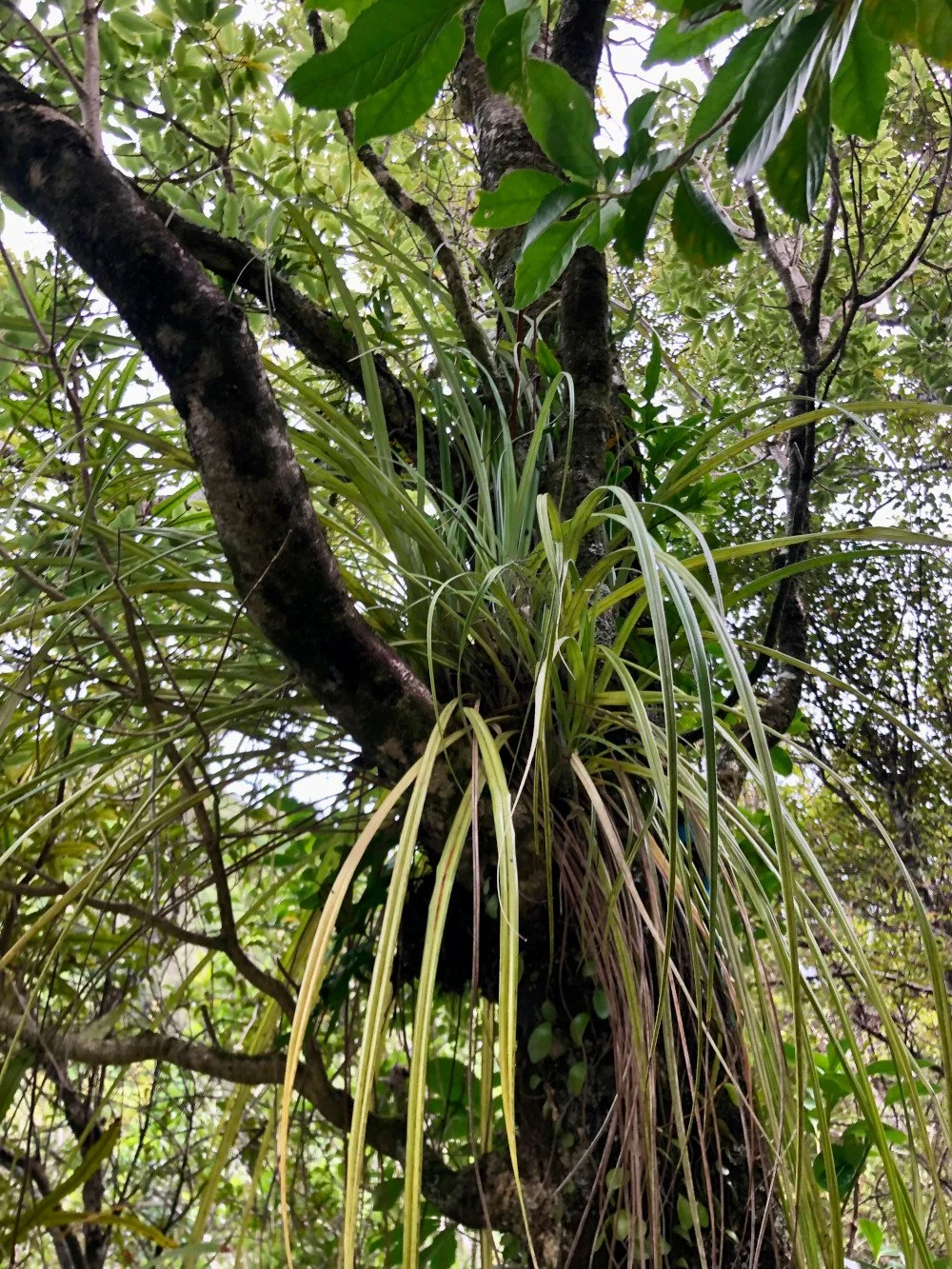
A large epiphytic astelia endemic to New Zealand, forming massive nest-like clumps high in forest canopies. This species is recognised for its long glossy green leaves, silver undersides, orange berries, and its important ecological role as a canopy habitat plant.
Natural habitat:
Occurs naturally in coastal and lowland forest, mature podocarp forest, damp gullies, shaded rock faces, and forest canopies as an epiphyte.
Growing environment:
Partial shade to full shade, Humid conditions, Free-draining organic soils & Frost tolerant once established.
Thrives in cool moist environments with high humidity and protection from prolonged drought.
Endemic distribution:
Endemic to New Zealand.
Found throughout the North, South and Stewart Islands.
Height:
Approximately 1–1.5 m tall
Width:
Forms large clumps approximately 1–1.5 m across
Flowering:
Spring to summer
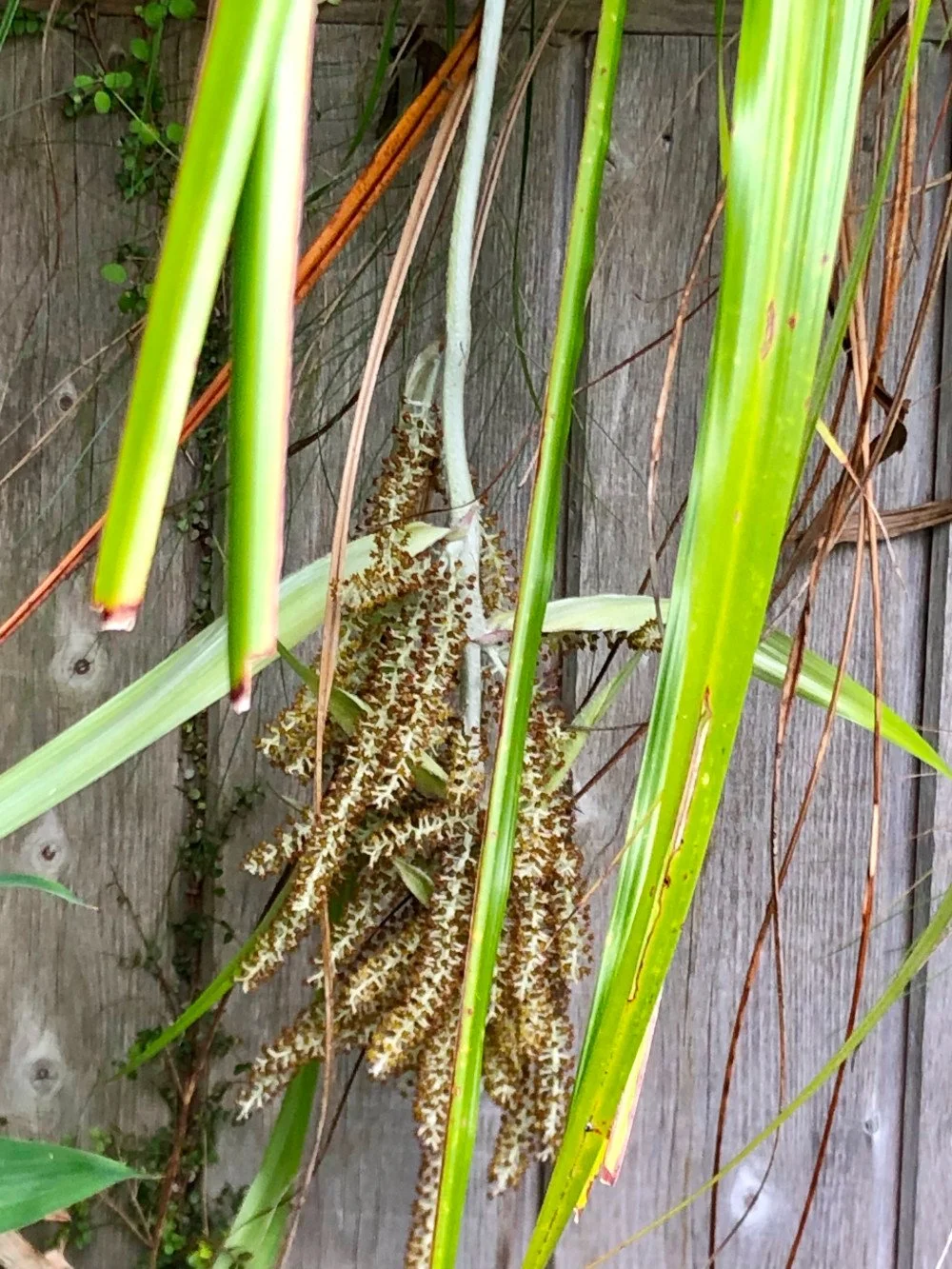
Produces green to reddish-pink flowers carried on pendulous branched racemes.
Fruiting:
Autumn to winter
Female plants produce attractive orange-red berries.
Uses:
• Epiphytic forest plantings
• Shaded native gardens
• Architectural foliage planting
• Large container specimens
• Native bird habitat
• Forest restoration projects
Appearance:
Growth habit:
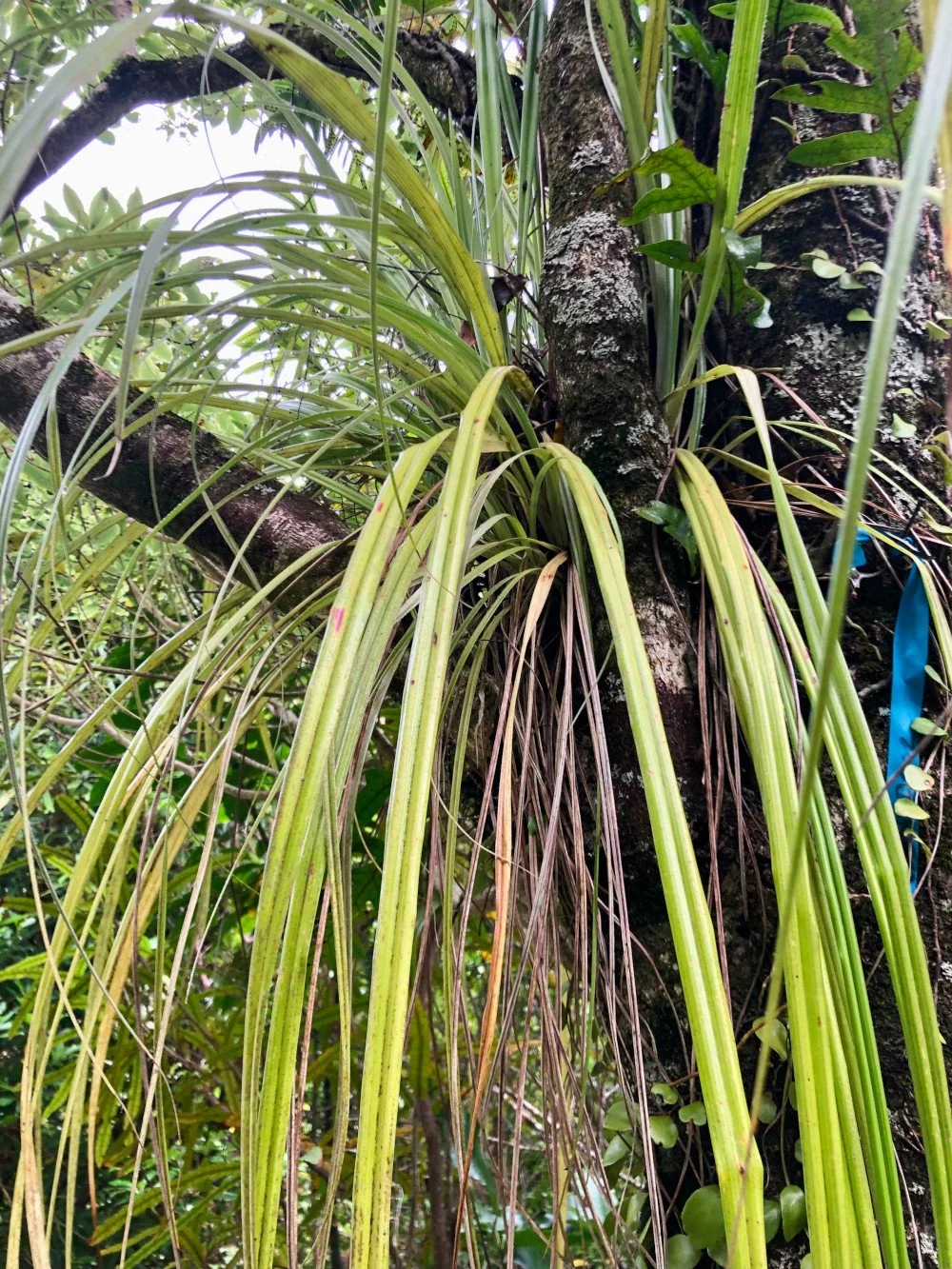
A robust tufted perennial forming dense hanging or perched colonies on trees, cliffs, or forest floors.
Leaves:
Leaves are long, arching, sword-like, glossy green above with silvery-scaled undersides and distinctive dark basal sheaths.
Flowers:
Flowers are cream to greenish with reddish tones, produced on long branched drooping inflorescences.
Fruit:
Produces translucent orange to red fleshy berries attractive to birds.
Ecology:
An important canopy species which traps moisture, leaf litter, and nutrients, creating habitat for native insects, lizards, amphibians, and forest invertebrates.
Associated wildlife:
Frequently associated with kererū, tūī, pekapeka, native lizards, and numerous arboreal insects.
How to grow:
Best planted in shaded moist sites with excellent drainage and high organic matter. Performs exceptionally well mounted epiphytically, in hanging baskets, or beneath mature trees.
Propagation:
Can be propagated from fresh seed or by division of mature clumps.
Garden value:
A spectacular architectural native prized for its lush tropical appearance, cascading foliage, and ecological value. Particularly effective in rainforest-style gardens, shaded courtyards, and epiphytic displays.