
Sickle Spleenwort
Botanical name:Asplenium polyodon
Synonyms:Asplenium falcatum, Tarachia polyodon
Common name(s): Sickle Spleenwort, Petako
Plant facts:
A graceful forest fern recognised for its long pendulous fronds, dark chocolate-brown rachis, and sharply toothed pinnae. This widespread species occurs throughout New Zealand and the Pacific, commonly growing as an epiphyte in humid forest environments.
Natural habitat:
Occurs naturally in coastal to montane forest, scrub, rocky outcrops, fallen logs, and tree trunks in humid shaded environments.
Growing environment:
Shade to partial shade, Moist free-draining soils, Humid & Sheltered.
Thrives in rich forest soils with high humidity and protection from drying winds.
Distribution:
Indigenous to New Zealand, Madagascar, Indo-Malaysia, Australia, and Pacific Islands.
In New Zealand found throughout the Kermadec Islands, Three Kings Islands, North Island, South Island, Stewart Island/Rakiura, and Chatham Islands.
Height:
Approximately 0.25–1 m tall
Width:
Forms clumps approximately 0.5–1 m across
Uses:
• Native forest gardens
• Shaded rock walls
• Epiphytic displays
• Fern collections
• Woodland landscaping
• Large container cultivation
Appearance:
Growth habit:
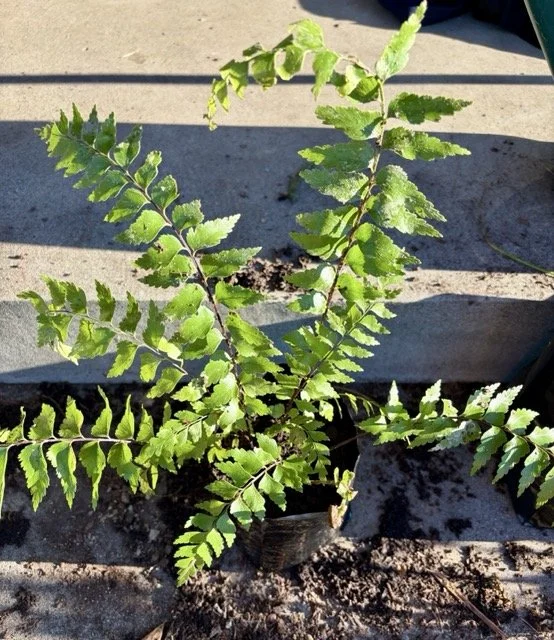
A tufted evergreen fern with arching to pendulous fronds arising from a short creeping rhizome.
Fronds:
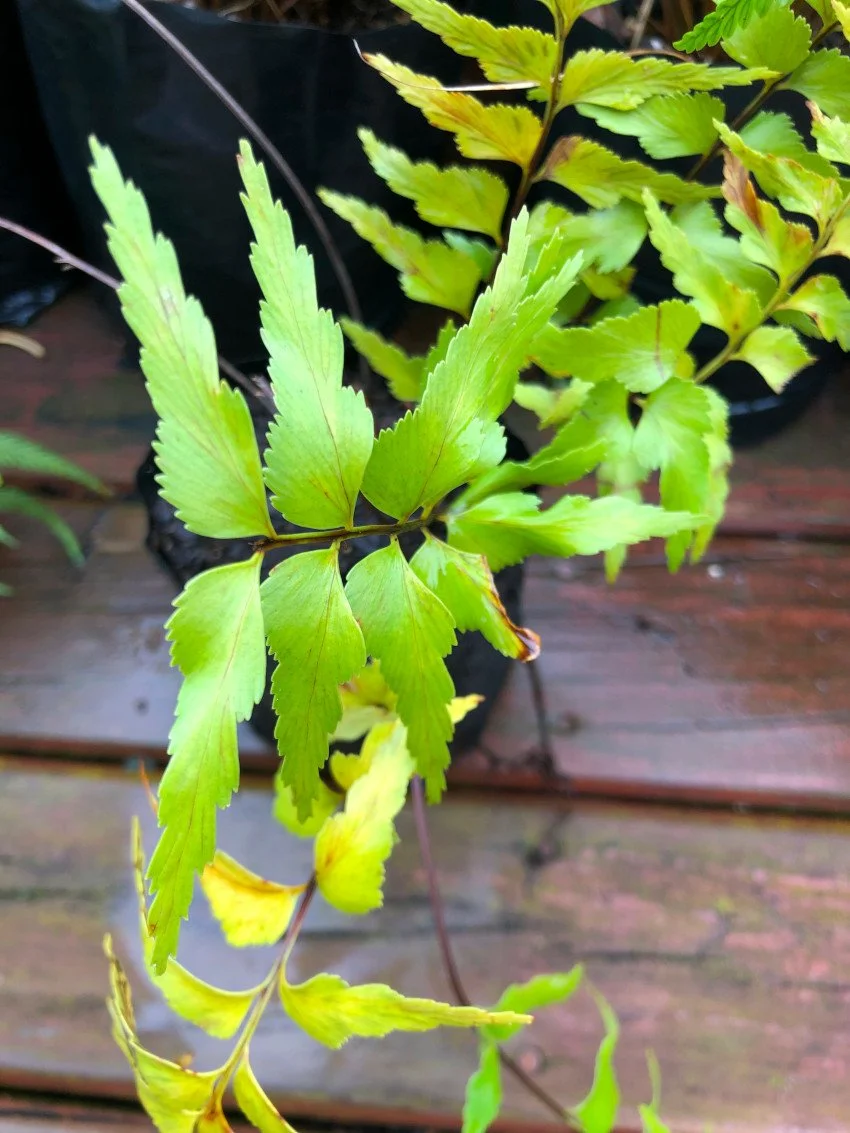
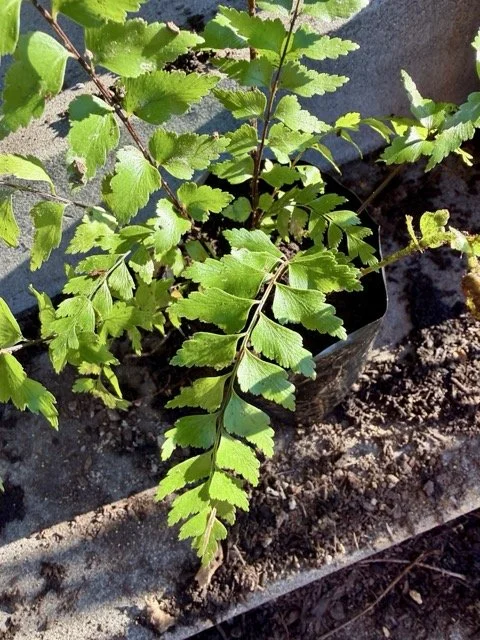
Fronds are long, leathery, dark green, glossy above, and often gracefully drooping.
Leaflets:
Pinnae are narrow and sharply toothed with irregular double-serrated margins and occasionally enlarged basal lobes.
Rhizome and stems:
Rhizomes are stout and densely covered in red-brown scales. The rachis is a distinctive dark chocolate brown and heavily scaly.
Sori:
Long narrow sori develop beneath the fronds and may curve slightly away from the midrib.
Ecology:
A common humid forest fern that grows terrestrially and epiphytically, contributing to dense subtropical forest understories.
Cultural uses:
Known traditionally by the Māori name petako.
How to grow:
Best grown in sheltered semi-shaded conditions with moist fertile free-draining soil. Appreciates high humidity and protection from direct sun and frost.
Propagation:
Propagated from spores or division of established clumps. Slow growing initially but develops into a highly ornamental specimen.
Garden value:
A striking and elegant fern prized for its pendulous fronds and dark contrasting stems. Excellent for shaded woodland gardens, ferneries, pots, and vertical rock wall plantings.