


Jointed Wire Rush
Botanical name: Apodasmia similis
Synonym: Leptocarpus similis
Common name(s): Jointed Wire Rush, Oioi
Plant facts:
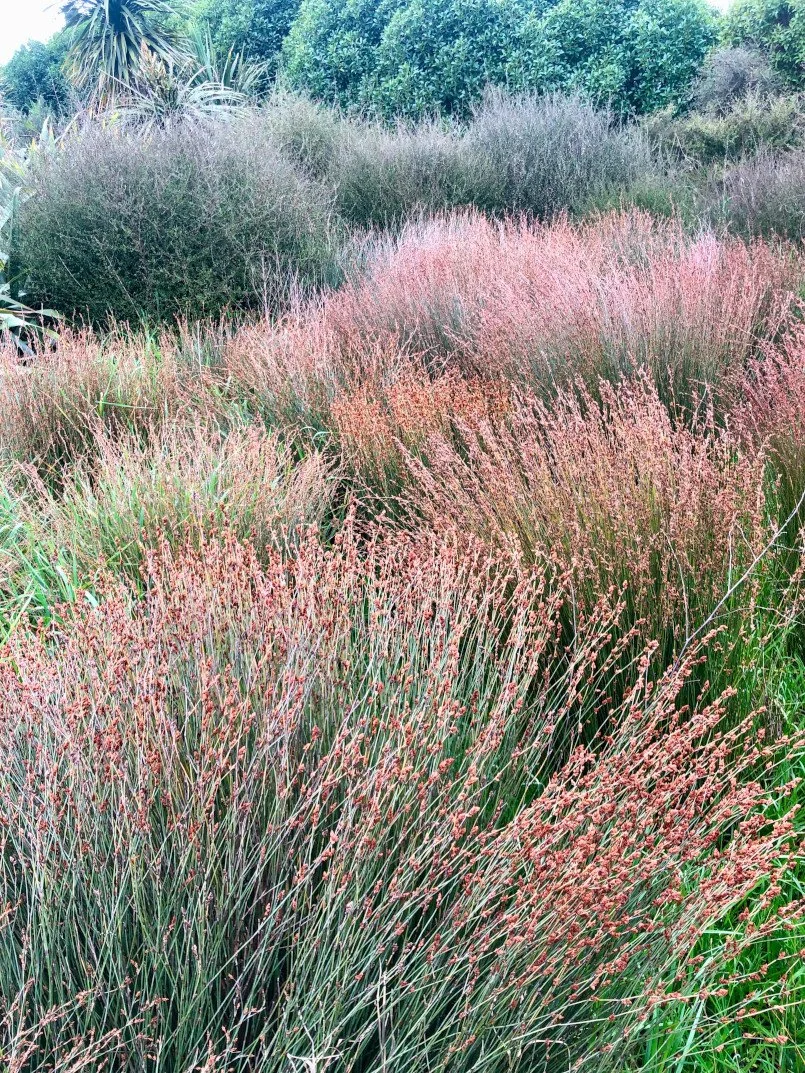
A striking rush-like wetland plant endemic to New Zealand, valued for its upright sculptural stems and adaptability to coastal and freshwater wetlands. Oioi forms dense clumps of smooth segmented culms that range from grey-green to reddish tones, creating strong architectural texture in natural and designed landscapes.
Natural habitat:
Occurs naturally in estuaries, saltmarshes, dune hollows, sandy flats, peat bog margins, lake edges, and geothermal wetlands.
Growing environment:
Full sun, Wet soils, Coastal tolerant & Wind tolerant.
Thrives in damp to waterlogged soils and tolerates both freshwater and saline conditions.
Endemic distribution:
Endemic to New Zealand.
Found throughout the Three Kings, North, South, Stewart, and Chatham Islands.
Height:
Approximately 0.5–2.6 m tall
Width:
Forms dense spreading clumps approximately 0.5–1.5 m across
Flowering:
Spring to early summer
Produces subtle brownish flower clusters from October to December.
Fruiting:
Summer
Small seed-like fruits mature from December to March.
Uses:
• Wetland and riparian restoration
• Coastal revegetation
• Stormwater treatment plantings
• Erosion control
• Modern landscape design
• Habitat creation for wetland fauna
Appearance:
Growth habit:
A densely tufted rush-like perennial with upright cylindrical stems arising from creeping rhizomes.
Stems:
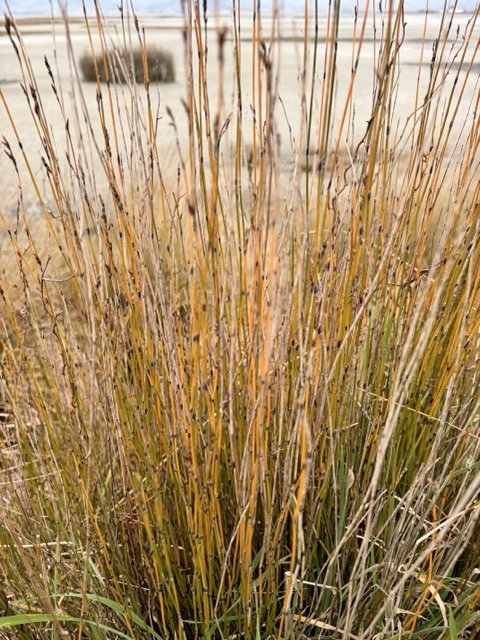
Culms are smooth, segmented, and often glaucous grey-green, yellow-green, or flushed reddish tones. Older leaf sheaths appear as dark brown bands along the stems.
Flowers:
Male and female flowers occur on separate plants. Flower clusters are subtle and brown to reddish in colour.
Fruit:
Tiny angular fruits develop after flowering and may disperse through wind and water movement.
Ecology:
An important native wetland species providing shelter and habitat for insects and wetland fauna. It naturally stabilises estuarine margins and damp soils while tolerating fluctuating water levels and saline exposure.
Associated wildlife:
Apodasmia similis is the host plant for the endemic New Zealand leafhoppers Paracephaleus hudsoni and Paracephaleus curtus.
How to grow:
Very hardy and adaptable. Performs best in full sun with permanently moist to wet soils but tolerates a wide range of soil conditions once established. Suitable for coastal gardens, rain gardens, ponds, swales, and urban landscaping.
Propagation:
Easy from fresh seed or division of rooted clumps and rhizomes.
Garden value:
A highly architectural native plant ideal for modern landscapes and wetland gardens. Its upright textured stems provide year-round structure, movement, and contrast alongside sedges, flax, and wetland grasses.