
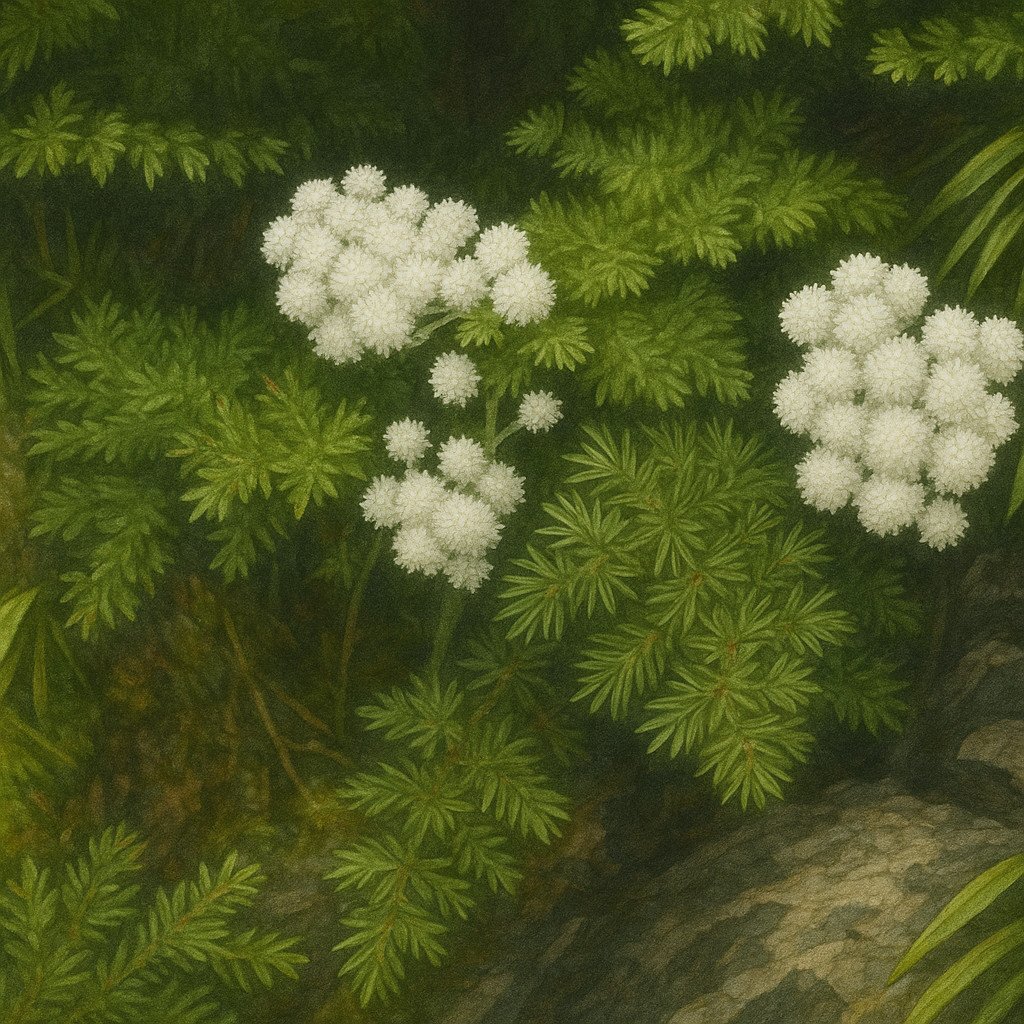
Haast’s Carrot
Botanical name: Anisotome haastii
Common name(s): Haast’s Carrot
Plant facts:
A bold and highly ornamental New Zealand alpine herb with deeply divided fern-like foliage and tall umbels of delicate white flowers. This striking member of the carrot family forms impressive sculptural rosettes and is naturally adapted to harsh alpine environments, making it an outstanding feature plant for rock gardens, scree plantings, and alpine collections.
Natural habitat:
Occurs naturally in alpine and subalpine grasslands, herbfields, rocky slopes, screes, and open mountain habitats.
Growing environment:
Full sun, Cool conditions, Free draining & Frost tolerant.
Prefers open exposed sites with excellent drainage, low humidity, and cool temperatures.
Endemic distribution:
Endemic to New Zealand.
Found mainly in alpine regions of the South Island.
Height:
Approximately 30–60 cm tall in flower
Width:
Approximately 30–50 cm across
Flowering:
Summer
Produces tall branching stems carrying clusters of delicate white flowers during the warmer months.
Fruiting:
Late summer to autumn
Develops ribbed winged seed capsules dispersed by wind.
Uses:
• Alpine and scree gardens
• Native alpine collections
• Rock garden specimen plant
• Botanical and conservation plantings
• Structural foliage feature
Appearance:
Growth habit:
A stout perennial alpine herb forming a dense basal rosette with upright flowering stems.
Leaves:
Leaves are large, deeply divided, and finely dissected with narrow linear lobes tipped by flexible hair-like points. Foliage is lush green, highly textured, and fern-like in appearance.
Flowers:
Produces compound umbrella-shaped clusters of small white flowers held above the foliage on stout branched stems.
Fruit:
Narrow ribbed winged fruits develop after flowering and aid wind dispersal.
Ecology:
Adapted to exposed alpine conditions including frost, snow, wind, and strong sunlight. Seeds are dispersed by wind across open mountain habitats.
How to grow:
Best grown in full sun with sharply free-draining soil. Particularly suited to alpine troughs, rockeries, scree gardens, and raised beds where moisture drains freely around the roots. Avoid humid sheltered sites and heavy wet soils. Benefits from cool conditions and good airflow. Hardy to severe frosts once established.
Propagation:
Usually propagated from fresh seed sown in cool conditions. Germination may be slow and irregular. Established plants dislike root disturbance, so transplant carefully while young.
Garden value:
An exceptional native alpine with dramatic foliage and elegant flowering stems. Particularly effective when planted among rocks or gravel where its architectural form can be fully appreciated year-round.