
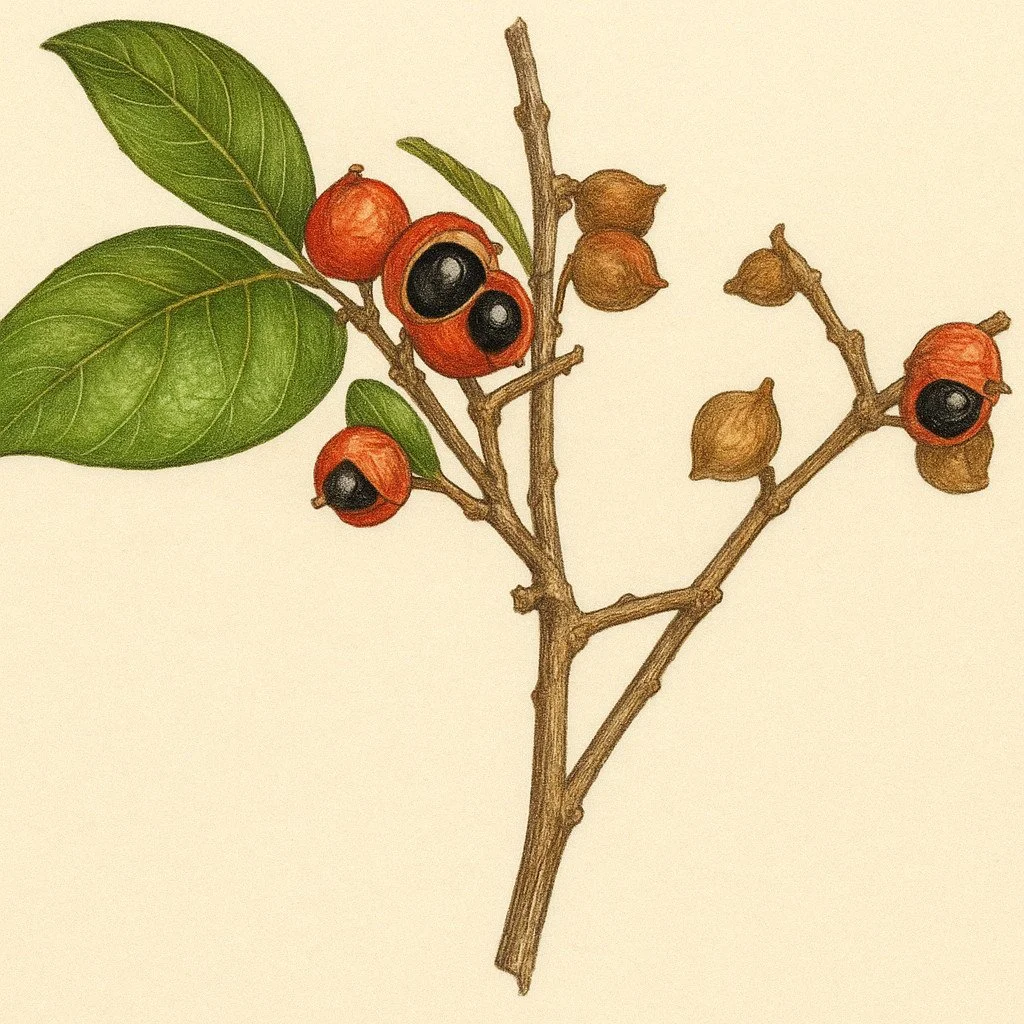
Three Kings Tītoki
Botanical name: Alectryon excelsus subsp. grandis
Common name(s): Three Kings Tītoki
Plant facts:
Three Kings tītoki is a rare island form of tītoki endemic to the remote Three Kings Islands. It is a smaller, spreading, often multi-trunked tree distinguished by its large glossy bullate leaflets and dense coastal growth habit. The bright red fleshy fruits surrounding glossy black seeds are highly ornamental and attractive to birds.
Natural habitat:
Occurs naturally in exposed coastal forest and coastal shrubland of the Three Kings Islands. It is often found along forest margins and occasionally as a subcanopy tree within kānuka-dominated forest.
Growing environment:
Sun, Coastal, Wind & Well drained soil tolerant.
Endemic distribution:
Endemic to the Three Kings Archipelago, known naturally from Great Island (Manawa Tawhi) and West Island.
Height:
Typically 2–7 m tall
Flowering:
Produces clusters of small crimson-red flowers carried in branched sprays.
Flowering period:
October – December
Fruiting:
Hairy brown capsules split open to expose glossy black seeds surrounded by fleshy scarlet arils.
Fruiting period:
December – April
Uses:
• Coastal native landscaping
• Rare specimen tree
• Island restoration plantings
• Shelter and habitat planting
• Bird attracting species
• Ornamental foliage and fruit display
Appearance:
Growth habit:
A spreading shrub or small tree, commonly multi-trunked from the base with stout erect branches.
Bark:
Brown and lenticellate with young growth covered in fine rusty-brown hairs.
Leaves:
Large glossy pinnate leaves with 2–4 pairs of broad oblong to ovate leaflets. The leaf surface is highly glossy and noticeably bullate (blistered or puckered), which helps distinguish it from mainland tītoki.
Flowers:
Small crimson flowers produced in clustered panicles.
Fruit:
Round hairy capsules split to reveal brilliant scarlet fleshy arils surrounding shiny black seeds.
Similar species:
Closely related to common tītoki (Alectryon excelsus subsp. excelsus), but differs by its smaller size, multi-trunked habit, and much broader glossy bullate leaflets. Mainland tītoki usually forms a taller single-trunked tree with narrower, flatter leaflets.
Threats:
Previously severely reduced by browsing goats on the Three Kings Islands. Since goat eradication in 1946 the species has gradually recovered and is now increasing naturally across parts of the islands.
How to grow:
Fresh seed germinates readily and plants establish well in warm coastal conditions. Best grown in full sun or light shade with free-draining soil.
Care should be taken when sourcing seed, as many cultivated plants hybridise with mainland tītoki and true pure Three Kings forms are uncommon in cultivation.
An excellent rare native specimen for frost-free coastal gardens and collections of northern New Zealand flora.