
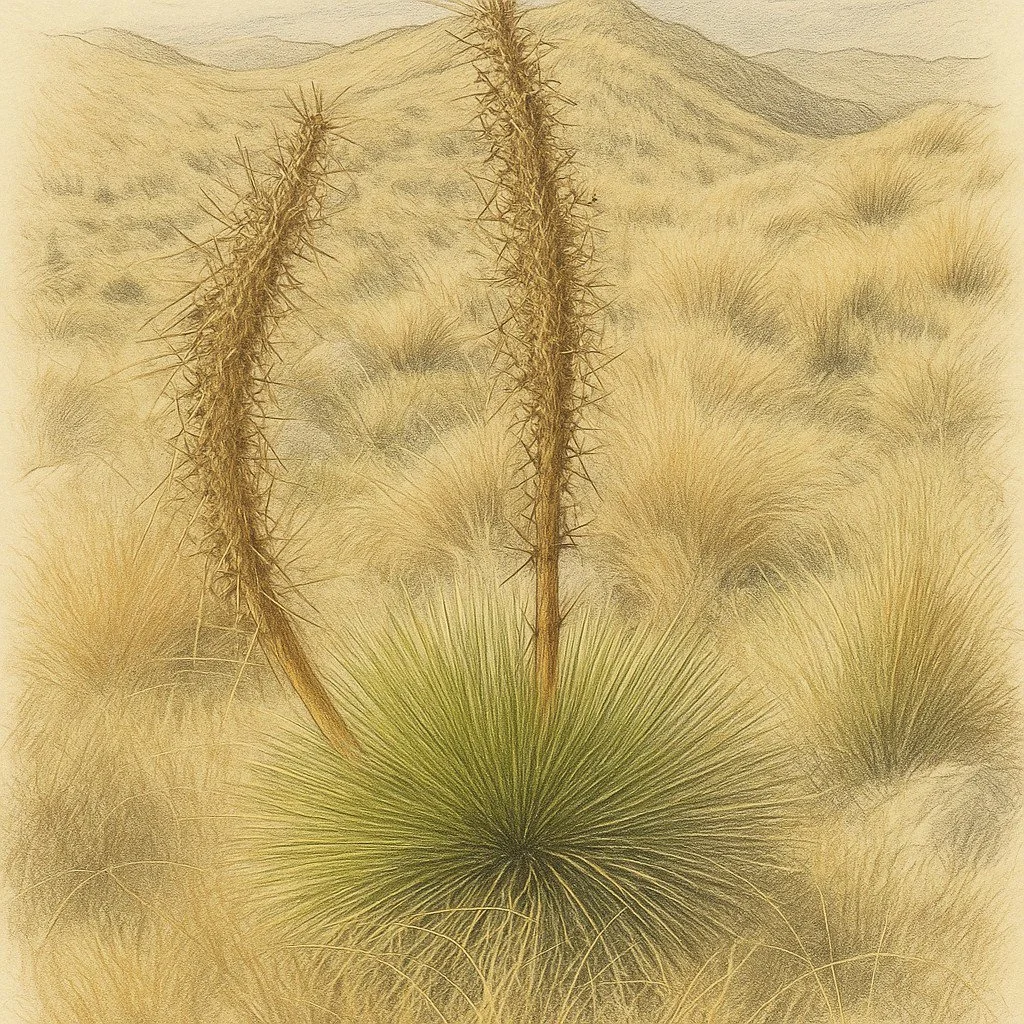
Aciphylla subflabellata
Botanical name: Aciphylla subflabellata
Common name(s): Speargrass
Plant facts:
A distinctive medium-sized speargrass with finely divided fan-like foliage arranged in flattened sprays. This hardy alpine species forms dense spiky rosettes and produces tall dramatic flowering stems topped with clusters of yellow flowers.
Natural habitat:
Dry montane to subalpine grasslands, alluvial terraces, rocky slopes, tussocklands, and intermontane basins.
Growing environment:
Frost, Sun, Wind & Free draining tolerant.
Endemic distribution:
Endemic to the eastern South Island of New Zealand, from south-eastern Marlborough to Southland.
Height:
Foliage rosettes up to 80 cm tall, flowering stems reaching approximately 1 m tall
Flowering:
December – February with yellow flowers
Fruiting:
February – May
Uses:
• Alpine and dryland landscaping
• Tussock and rocky slope restoration
• Architectural foliage feature
• Native alpine collections
• Suitable for large tubs and rock gardens
Appearance:
Growth habit:
Forms dense stout rosettes of sharply pointed foliage. Plants are generally smaller and finer-textured than Aciphylla squarrosa.
Leaves:
Leaves are yellow-green to grey-green, finely divided, and arranged in flattened fan-like sprays. The narrow leaflets are rigid, sharply pointed, and strongly serrated.
Flower stems:
Produces thick deeply grooved flowering stems carrying dense umbels above the foliage. Long narrow flowering bracts often become strongly reflexed as they mature.
Fruit:
Forms winged dry fruits adapted for dispersal by alpine winds.
How to grow:
Best grown in full sun with excellent drainage. Performs well in alpine gardens, dry gravel beds, and rocky landscapes. Dislikes humid conditions and excessive moisture. Once planted it should not be disturbed or transplanted due to its sensitive root system. Can also be successfully grown in large containers or alpine tubs.