
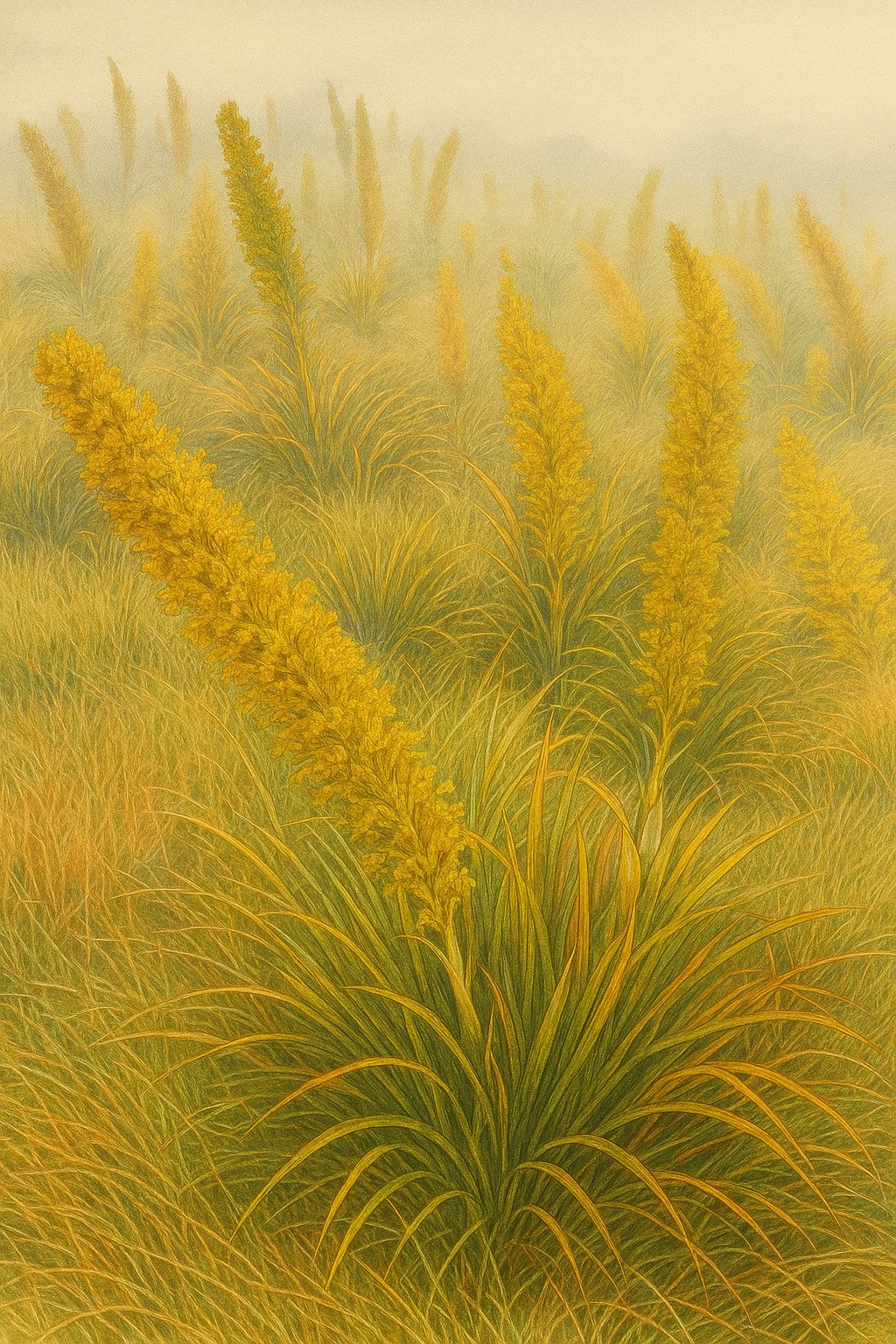
Giant Speargrass
Botanical name: Aciphylla colensoi
Common name(s): Giant Speargrass, Taramea, Spaniard
Plant facts:
A dramatic alpine speargrass forming dense rosettes of rigid, sharply pointed leaves. Distinguished by its bold reddish-orange leaf midribs and tall yellow flower spikes, this iconic New Zealand alpine species is highly adapted to harsh mountain environments.
Natural habitat:
Occurs in montane to low alpine grasslands, shrublands, herbfields, and snow tussock environments.
Growing environment:
Frost, Sun, Wind & Free draining tolerant.
Endemic distribution:
Endemic to New Zealand. Found from Mt Hikurangi in the North Island south to mid-Canterbury in the South Island.
Height:
Rosettes up to 90 cm wide, flowering stems reaching over 1 m tall
Flowering:
Mainly November – February
Produces tall spikes of yellow flowers.
Fruiting:
December – April
Uses:
• Architectural alpine feature plant
• Tussock and alpine restoration planting
• Traditional Māori perfume plant (taramea)
• Habitat for alpine insects and wildlife
Appearance:
Growth habit:
A robust tufted herb forming dense spiny rosettes, often growing as solitary or clustered plants.
Leaves:
Leaves are thick, rigid, and deeply divided with strong serrated margins. The prominent red to reddish-orange midrib is a key identifying feature.
Flower stems:
Tall flowering spikes emerge from the centre of the rosette and are lined with sharp bracts and clusters of yellow flowers. Male and female flowers occur on separate plants.
Fruit:
Produces winged dry fruits adapted for wind dispersal in exposed alpine environments.
How to grow:
Requires full sun and excellent drainage. Best suited to alpine gardens, dry rockeries, and exposed sites. Extremely hardy once established but requires space due to its sharp spines and mature size.