
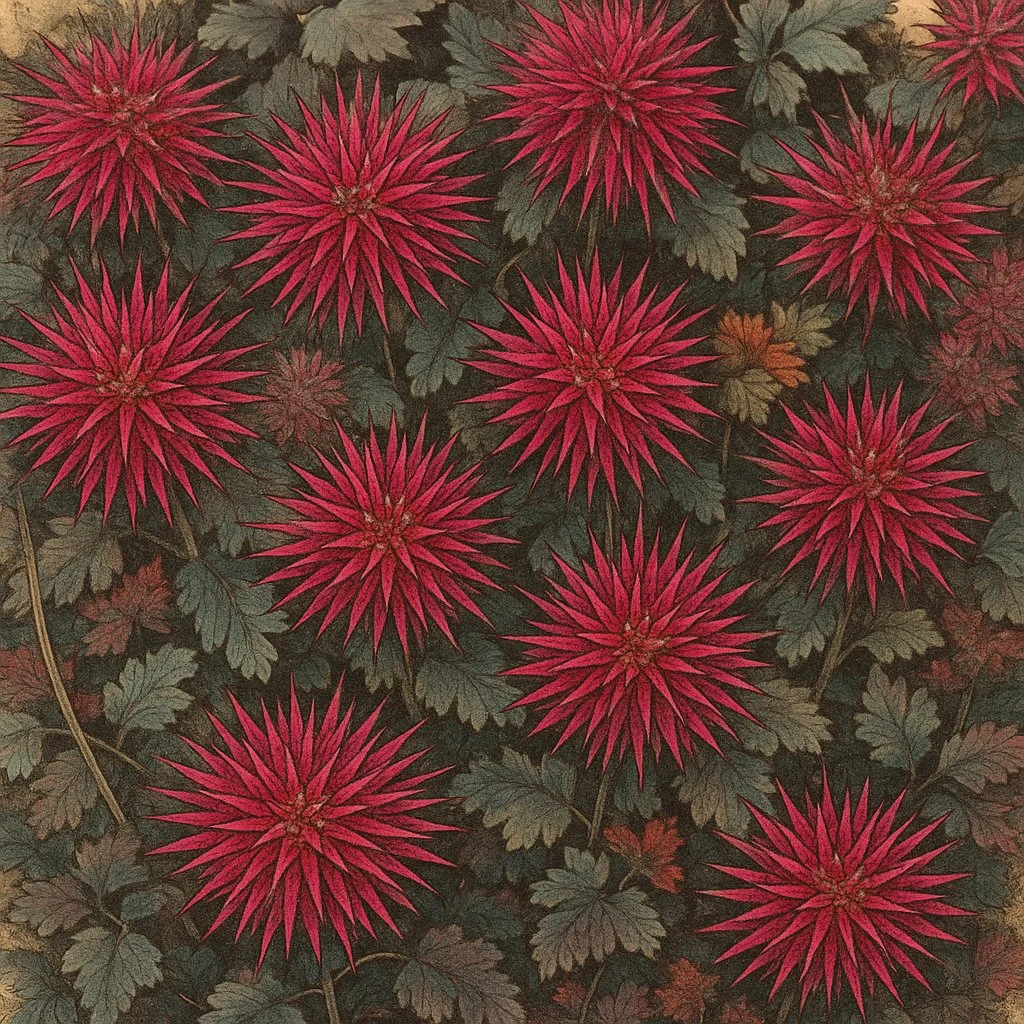
Bidibid
Botanical name: Acaena microphylla var. microphylla
Synonyms: None
Common name(s): Bidibid, Piripiri, New Zealand Burr
About:
A tiny, mat-forming native ground cover with glossy green to bronze foliage and attractive crimson seed heads. This compact alpine species spreads by creeping rhizomes and rooting stems, creating dense carpets that are ideal for rock gardens, gravel plantings, and erosion control. Unlike many other bidibid species, its decorative spines are not strongly barbed, making it a popular ornamental choice.
Natural habitat:
Typically found in montane to low alpine grasslands, river terraces, open herbfields, and unconsolidated gravelly or stony substrates.
Growing environment:
Frost, Sun, Wind & Free draining tolerant.
Endemic distribution:
Endemic to New Zealand, occurring naturally in the central North Island.
Height:
Approximately 2 cm tall
Width:
Spreading up to 50 cm or more
Flowering:
November – January
Produces small white globe-shaped flower heads.
Fruiting:
January – April
Develops attractive crimson to red seed heads that mature to brown or golden-brown.
Uses:
• Ground cover
• Alpine and rock gardens
• Gravel gardens
• Erosion control
• Dry garden plantings
• Texture contrast in native landscapes
Appearance:
Growth habit:
A very low-growing perennial forming dense, creeping mats through rhizomes and stems that root wherever they contact the soil.
Leaves:
Small, finely divided leaves with 9–15 rounded leaflets. The foliage is glossy green to bronze and edged with tiny hair-tipped teeth, creating a fine, delicate texture.
Flowers:
Tiny white, globe-shaped flower heads are carried on short, hairy stems just above the foliage during late spring and summer.
Fruit:
Produces distinctive cone-shaped seed heads with bright red to crimson spines that gradually fade to golden-brown as they mature. The spines are only weakly barbed, making them less likely to cling than many other bidibid species.
Ecology:
This hardy alpine species naturally colonises unstable gravel and stony ground, helping to bind loose soils and reduce erosion. The flowers provide a nectar source for small native insects, while the dense mats create shelter for ground-dwelling invertebrates.
Associated habitats:
Montane grasslands, alpine herbfields, gravel river terraces, screes, rocky outcrops and open stony flats.
How to grow:
Grow in full sun with very free-draining soil. It performs best in lean, gravelly or sandy soils and dislikes prolonged wet conditions. Once established it is highly drought tolerant and requires very little maintenance.
Propagation:
Easily propagated by division, rooted runners or fresh seed. Division is the quickest and most reliable method, with plants establishing rapidly in suitable conditions.
Cultural use:
Known traditionally as Piripiri, the seed heads disperse naturally by attaching to animals, aiding the spread of the species across open alpine landscapes.
Garden value:
An outstanding miniature ground cover for alpine gardens, rockeries and gravel landscapes. Its compact habit, glossy foliage and colourful seed heads provide year-round interest, while its excellent drought tolerance and low maintenance requirements make it an ideal choice for difficult, exposed sites.