Carex coriacea
Botanical name: Carex coriacea
Synonyms: Carex ternaria var. pallida, Carex ternaria f. pallida
Common name(s): Cutty grass, Rautahi
About:
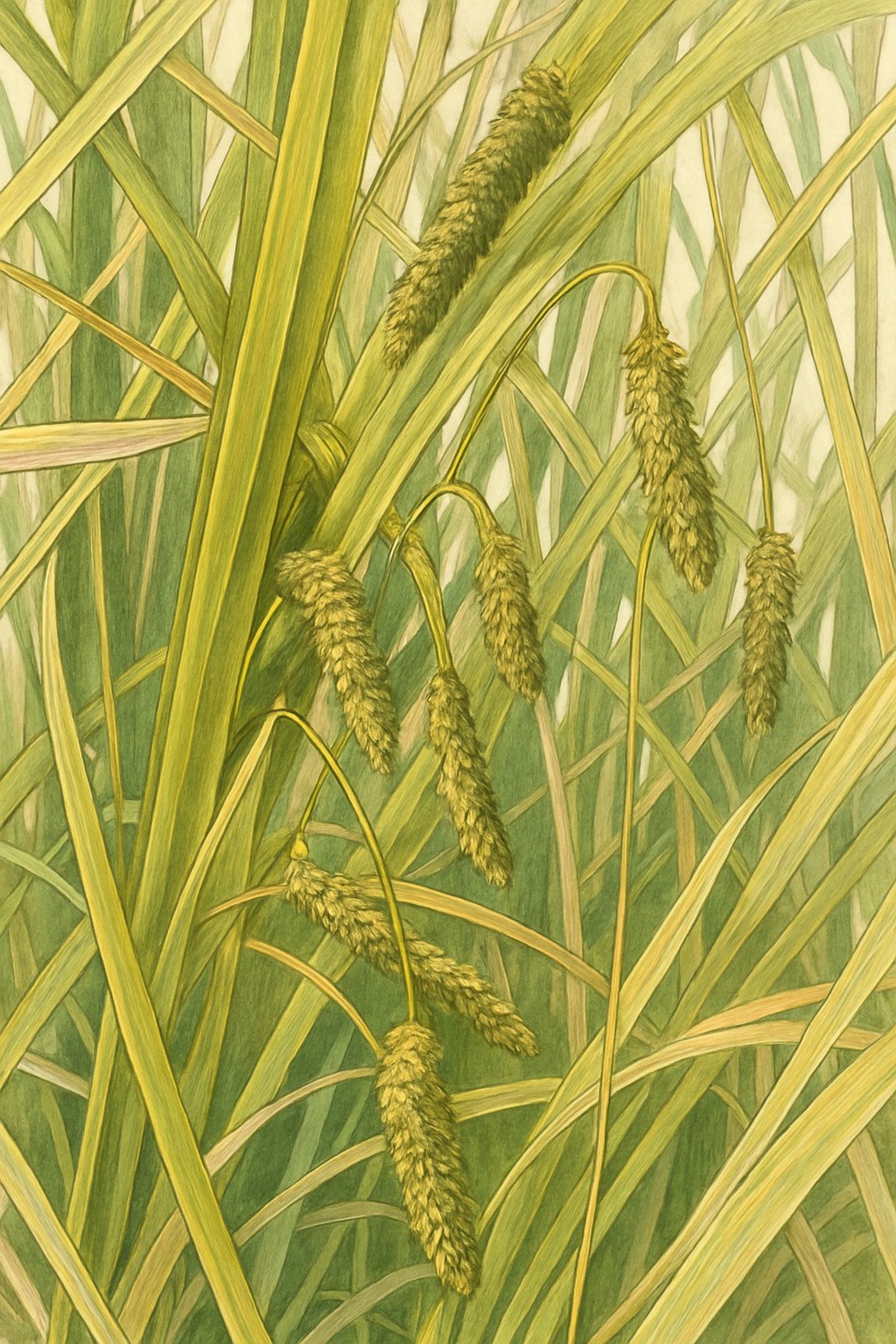
A robust rhizomatous native sedge forming coarse glossy yellow-green clumps with distinctive drooping seed heads. Common in damp grasslands and wetlands, it is valued for erosion control and large-scale restoration planting.
Natural habitat:
Damp seepages, swampy river flats, wet grasslands, wetlands and alpine seepage systems.
Growing environment:
Thrives in full sun and tolerates a wide range of soils and moisture levels, from damp pasture to wetland margins.
Endemic distribution:
Endemic to New Zealand. Found through the North, South and Stewart Islands from Pureora and the Kaingaroa Plain southwards, especially common in eastern South Island regions.
Height:
20 cm – 1.2 m tall
Width:
Spreading extensively by rhizomes
Flowering:
October – December
Fruiting:
December – May
Uses:
• Wetland restoration
• Riparian and stream planting
• Erosion control
• Groundcover in damp sites
• Alpine and tussock plantings
• Naturalistic landscape planting
Appearance:
Growth habit:
Strongly rhizomatous sedge forming coarse spreading tufts connected by woody underground rhizomes.
Leaves:
Glossy yellow-green to green leaves that are stiff, leathery and sharply roughened along the edges.
Flowers:
Numerous drooping flower spikes borne on long thread-like stalks, with upper male and lower female spikes.
Fruit:
Smooth pale green to brown utricles containing dark brown to black nuts dispersed by wind and animals.
Ecology:
Forms dense colonies in damp habitats, stabilising wet soils and providing habitat within wetland ecosystems.
Associated habitats:
Often found with Phormium tenax, Apodasmia similis, Carex maorica, Carex virgata and other freshwater wetland species.
How to grow:
Easy to grow in full sun with moist to wet soils. Suitable for wetlands, pond margins and large open landscapes where it has room to spread.
Propagation:
Readily propagated from fresh seed or by division of rhizomes and established clumps.
Cultural use:
Traditionally recognised as a widespread wetland sedge within indigenous freshwater ecosystems.
Garden value:
An excellent large-scale native sedge for wetland restoration, naturalistic planting and difficult damp sites where its vigorous spreading habit and flowing seed heads create strong texture and movement.